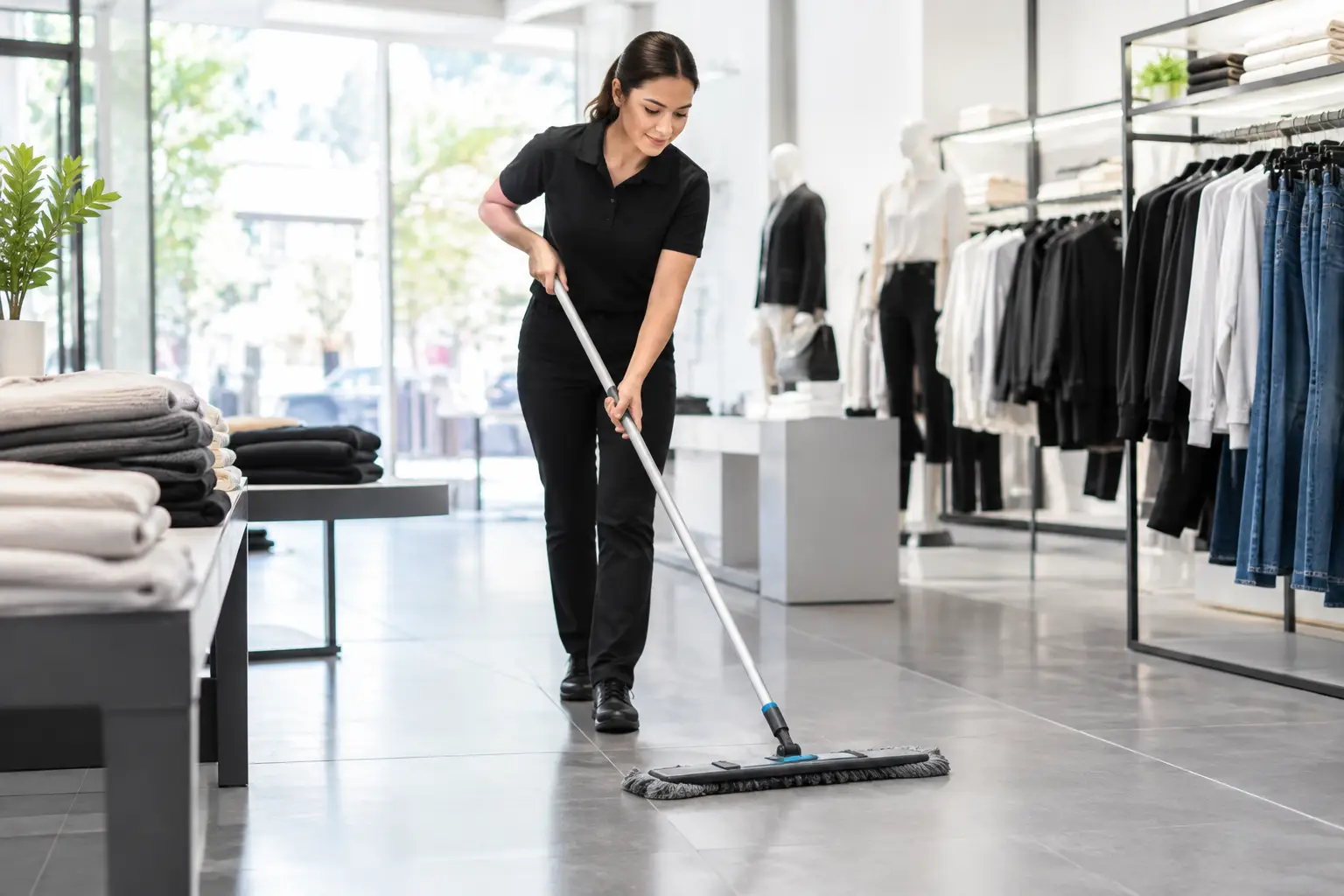
Customers may not comment on a spotless entrance or a streak-free fitting-room mirror. They will, however, notice when those details have been overlooked. Retail store cleaning in Newmarket is not about making a space look freshly scrubbed every minute of the day. It is about keeping the store ready for the first shopper in the morning, the lunchtime rush, and the last customer before closing.
In a retail setting, cleanliness is part of the shopping experience. It affects how merchandise looks, how comfortable people feel browsing, and whether staff can focus on customers instead of hunting for paper towels or constantly wiping fingerprints from displays. The goal is a store that feels cared for without interrupting the work of selling.
The Areas Customers Notice First
Retail cleaning is rarely judged as one big job. Customers notice small moments: a mark on a glass door, dust on a display ledge, or a fitting room that looks as though nobody has checked it since opening. Those details can shape someone’s impression before they have even picked up a product.
The entrance sets the standard. In Newmarket, that means preparing for changing weather. Salt, slush, wet leaves, grit and pollen can all find their way indoors. During winter and the shoulder seasons, entrance mats need regular attention, and hard floors often need more than a quick pass with a mop. Leftover residue can make a floor look dull even after it has been cleaned.
Glass deserves the same attention. Front doors, accessible display glass, mirrors, product cases and interior glass partitions collect fingerprints quickly. Clean glass lets the merchandise stand out. Streaks and smudges, on the other hand, can make even a carefully arranged display feel unfinished. Exterior windows and specialized glass work should be identified separately when agreeing on a professional cleaning scope.
Then there are the quieter spaces: fitting rooms, washrooms, staff rooms and checkout counters. These are not always the first areas someone sees, but they have a significant effect on comfort and confidence. A tidy fitting room feels welcoming. A clean washroom with the agreed supplies in place shows that someone is paying attention.
Retail Store Cleaning in Newmarket Needs a Routine
The right cleaning schedule depends on foot traffic, store layout, operating hours and what is being sold. A boutique with several fitting rooms has different needs from a sporting-goods store, a salon retail area or a showroom with large glass panels. One after-hours clean each week might suit a quieter shop. A busy store may benefit from two or more scheduled visits, along with brief staff-led checks during opening hours.
It helps to distinguish maintenance cleaning from periodic detail work. Maintenance keeps the areas people use every day presentable: floors, washrooms, touchpoints, bins, counters and accessible glass. Detail work addresses the buildup that is easy to miss during a busy week, such as reachable baseboards, shelving edges, door frames and areas beneath displays that can be safely moved. Higher areas, specialist equipment and anything requiring display dismantling should be discussed separately rather than assumed to be included.
Trying to cover everything with one long monthly clean often creates a familiar problem. The store looks great for a day or two, then gradually slips back. A recurring routine can maintain a steadier standard and reduce the need for a frantic reset before an event, inspection or product launch.
Plan Cleaning Around the Customer Journey
Start at the entrance and walk the route a customer takes. What do they touch? What do they see while waiting to pay? Where do they pause, sit, try on products or look in a mirror? This simple walk-through reveals the surfaces that deserve frequent attention rather than focusing only on what is easiest to reach.
For many stores, the daily priorities are straightforward: clear entrance glass, floors free from visible debris, fresh washrooms, tidy fitting rooms and clean checkout counters. Staff can handle quick spot checks when trained and supplied for those tasks. An agreed commercial cleaning plan can cover the scheduled work that calls for dedicated time, suitable products and a consistent routine.
That division matters. Asking retail associates to manage every cleaning task between helping customers, receiving shipments and closing tills can lead to uneven results. They may be perfectly capable, but they are also busy doing the jobs they were hired to do.
Floors Need More Than a Quick Mop
Floors carry much of the visible wear in a retail store. They also pick up dirt from outdoors. A mop may help with a quick refresh, but it will not necessarily remove built-up residue, neglected edges or grime trapped in textured flooring.
Different materials need different care. Vinyl plank, ceramic tile, sealed concrete, hardwood and carpet respond differently to moisture and cleaning products. Too much water can leave streaks, create slipping hazards or damage certain finishes over time. A product that leaves residue behind can also make floors appear dirty again faster, even when staff have been cleaning regularly.
A practical floor-care routine includes suitable vacuuming or sweeping, surface-appropriate mopping, attention to corners and edges, and seasonal adjustments near the entrance. In winter, more frequent mat and vestibule checks can prevent salt and grit from travelling farther into the store. In summer, dust and pollen may need more attention. The routine should reflect actual conditions, not follow a calendar that never changes.
For busy retail spaces, cleaning also needs to be planned with safety in mind. Wet floors should be managed with appropriate precautions, and detailed floor work is often easier to complete when customers are not moving through the area.
Washrooms and Fitting Rooms Shape the Experience
Customers judge these spaces differently from the sales floor. In a washroom, they look for basic signs of care: a clean sink, an emptied bin, stocked supplies, a dry floor and fixtures without visible buildup. In a fitting room, they want privacy, clear floors, clean mirrors and a space that is not cluttered with discarded hangers or tags.
These areas benefit from simple documented checks. A short checklist can help staff confirm when the space was inspected, whether bins need attention and whether supplies should be replenished. Restocking products and responsibility for providing them should be defined in the cleaning arrangement rather than assumed.
For higher-traffic stores, one sensible approach is scheduled professional cleaning outside business hours with short daytime checks by store staff. For quieter retailers, a recurring clean paired with opening and closing checks may be enough. The best plan is the one that keeps standards consistent without disrupting customers or employees.
Avoid the Cleaning Habits That Create More Work
Overusing scented products is one example. A strong fragrance does not mean a surface is clean, and it can be unpleasant in a small shop. Spraying cleaner directly onto screens, display electronics or delicate finishes without checking manufacturer guidance can also cause problems. Liquid may reach sensitive edges, cloud a surface or leave residue behind.
Another common mistake is treating every spill or mark with the same product. Coffee, cosmetics, grease, salt residue and adhesive each call for different considerations. Check the manufacturer’s care instructions and test suitable products in an inconspicuous area when appropriate. Never mix cleaning chemicals: some combinations can release harmful fumes.
Good retail cleaning routines do not need to be complicated. They need to explain what gets cleaned, how often, which surfaces need special care and who is responsible for each task. That clarity matters to owners and managers who do not have time to revisit the same problems week after week.
What to Expect From a Professional Retail Cleaning Service
A suitable cleaning plan begins with understanding the store rather than applying the same checklist to every business. Opening hours, access procedures, floor materials, customer traffic, washroom use and the number of displays all influence the work involved.
It also helps to plan for changes. A private shopping event, a large shipment, a new seasonal display or a small renovation can temporarily change what needs attention. If work leaves behind fine residue, our guide to cleaning construction dust after the crew leaves explains why that requires a different approach from routine maintenance.
For Newmarket retailers, the most useful starting point is a clear understanding of the space: which areas need attention daily, which can be handled less often, and which tasks require separate planning. Diamond Dynasty Cleaning works with commercial clients on agreed schedules and scopes; where outside help makes sense, those same details also make a commercial cleaning quote easier to define.
A clean retail space is not a finishing touch reserved for special occasions. It is part of how customers experience a business on an ordinary day. A practical routine helps keep that experience consistent, from the entrance to the fitting rooms and all the little details in between.


Stay Updated
We will send you info about Diamond Dynasty before it's released to the public