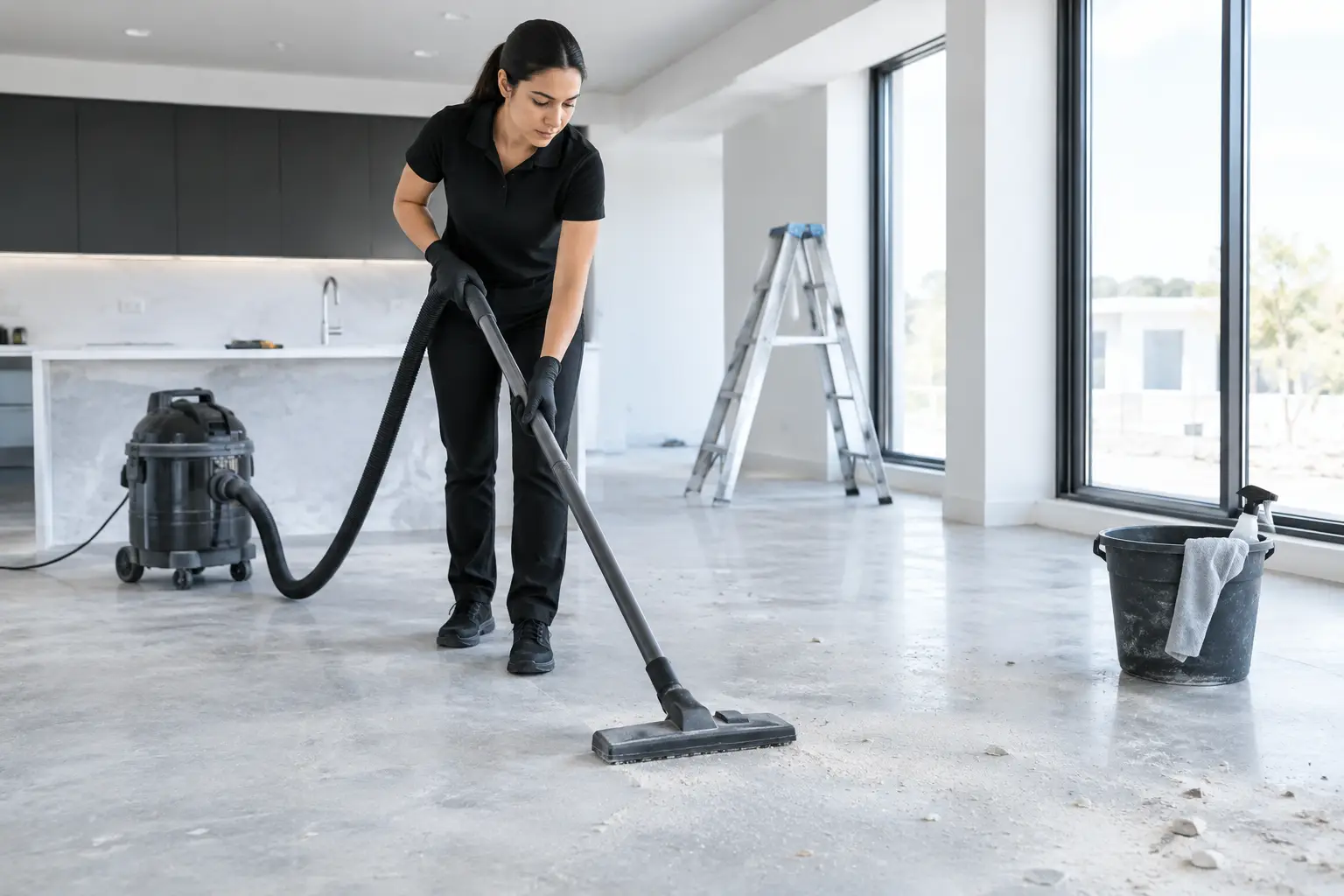
The renovation can be complete, the trades can be gone, and the space can still feel unfinished. Construction dust cleaning is what turns a newly built or renovated property from a worksite into a place that is ready to use, show, move into, or reopen. It is not a quick vacuum and wipe-down. Fine residue can remain throughout the property long after the major work is finished.
For homeowners, landlords, real-estate professionals, builders, and business owners in Barrie, Innisfil, Bradford, Newmarket, Aurora, Vaughan, and King City, the final clean is often the difference between a project that looks complete and one that still feels like it is under construction.
Why Construction Dust Needs a Different Cleaning Approach
Post-construction dust is unusually persistent because it is fine, dry, and mobile. Drywall dust, sawdust, grout haze, plaster residue, and other fine particles do not always stay where they land. They move through the property and can become visible again after the first round of cleaning if the process is rushed.
A standard maintenance clean is designed to keep a lived-in or operating space in order. A construction clean is a reset. The focus shifts to removing fine dust, residue, adhesive marks, protective-film remnants, fingerprints, and the evidence left behind during the final stages of the project.
The right approach also depends on the work completed. A bathroom renovation has different cleaning requirements than a whole-home remodel, retail fit-out, office refresh, or newly built property. Timing matters too. If trades still need to return for sanding, drilling, installation work, or touch-ups, it usually makes sense to wait until that work is finished before completing the final clean.
What a Proper Construction Dust Cleaning Covers
The work should begin with a walkthrough and a clear understanding of what is complete. Floors should be safe to access, paint should be dry, fixtures should be installed, and major construction debris should already be removed. The detailed clean finishes the property; it does not replace a contractor’s debris disposal or site-safety responsibilities.
Loose dust should be removed before wet cleaning begins. Thorough vacuuming takes away as much fine residue as possible so it is removed rather than pushed around or turned into a film when moisture reaches the surface.
From there, the cleaning can move through the property in a logical order, working from higher areas down before the final floor work. The exact sequence matters less than making sure dust is removed instead of simply transferred from one area to another.
Construction dust may also require more than one pass. Fine residue can become visible again as the property settles, so a second or third pass is completely normal on some projects.
In kitchens and bathrooms, the finishing work is especially visible. Cabinet interiors and exteriors, drawers, counters, fixtures, appliance exteriors, glass, and newly installed finishes all need detailed attention. These areas tend to make leftover dust, haze, and fingerprints easy to spot.
The rest of the property needs the same careful finish without treating every surface exactly the same way. Glass, painted finishes, tile, stone, wood, stainless steel, and other materials can require different products and techniques. The goal is to remove the evidence of construction without damaging the finish underneath it.
The Details That Get Missed When Cleaning Is Rushed
The last 10 percent of the job is where presentation is won or lost. A new floor can look excellent until fine dust becomes visible around the perimeter. A bright new bathroom loses its finish when grout haze remains on tile or fingerprints are left on polished hardware. Fresh cabinetry can still feel unfinished when residue remains inside or around the new installation.
Construction dust can also settle again after movement in the space. Furniture delivery, unpacking, inspections, or turning on an HVAC system may disturb fine particles that were sitting in less obvious areas.
This is why a staged approach can make sense for larger projects. One detailed post-construction clean removes the main dust and residue. A later touch-up, closer to handover, can capture anything that settles afterward.
This can be especially useful for property listings, new builds, commercial openings, and larger handovers. The project may be technically complete several days before the client, buyer, tenant, or staff actually sees it. Scheduling the final detail closer to that moment helps preserve the finished presentation.
Preparing the Site for the Final Clean
A little coordination prevents delays and produces a better result. Contractors and property owners should confirm that the major work is complete, including sanding, cutting, drilling, paint touch-ups, and installation work. If those tasks continue after cleaning, dust and marks will return.
Water and electricity should remain available so the cleaning team can use the required equipment and properly complete the work. Access instructions, parking details, elevator bookings, and any building requirements should also be arranged before the scheduled service.
Cleaning can also reveal issues that construction dust was hiding. Scratches, damaged finishes, missing caulking, uncured paint, or incomplete installations become much easier to see once the surrounding residue is gone. Those are repair or trade issues rather than cleaning issues and can then be addressed before handover.
When to Schedule Construction Dust Cleaning
Timing depends on the project, but there are usually two practical options. The first is a single final clean after the trades have finished and the major debris has been removed. This works well for contained projects and jobs with a firm completion date.
The second is a two-stage approach. The initial clean removes the heavier construction dust and residue once the main work is complete. A later detail clean takes place shortly before photography, possession, move-in, inspection, or reopening.
This can be worthwhile for larger homes, new builds, commercial properties, staged listings, and projects where deliveries or final inspections will bring additional traffic through the space before handover.
Choosing a Cleaning Team for Post-Construction Work
The best fit is a team that asks practical questions before arriving: What work was completed? Are the trades finished? Has the major debris been removed? Are there new or delicate finishes? When does the property need to be ready?
Clear communication matters because post-construction work has variables. A carefully protected and well-managed site will need a different level of cleaning than a property with fine dust throughout, adhesive residue, or heavier finishing work still left behind. The cleaning scope should match the actual condition of the project.
Equipment matters, but attention to sequence matters just as much. Loose dust should come off before detailed wiping begins, finished materials should be cleaned appropriately, and enough time should be allowed for repeat passes when the property needs them.
Diamond Dynasty Cleaning provides post-construction and post-renovation cleaning across Simcoe County and York Region for new builds, renovations, homes, and commercial projects. The goal is straightforward: remove the evidence of the work without losing sight of the finish the work was meant to create.
When the last contractor leaves, the property should not still feel like a construction site. Schedule the final clean around the handover, allow enough time for the detail work, and let the finished space look finished when people walk through the door.


Stay Updated
We will send you info about Diamond Dynasty before it's released to the public