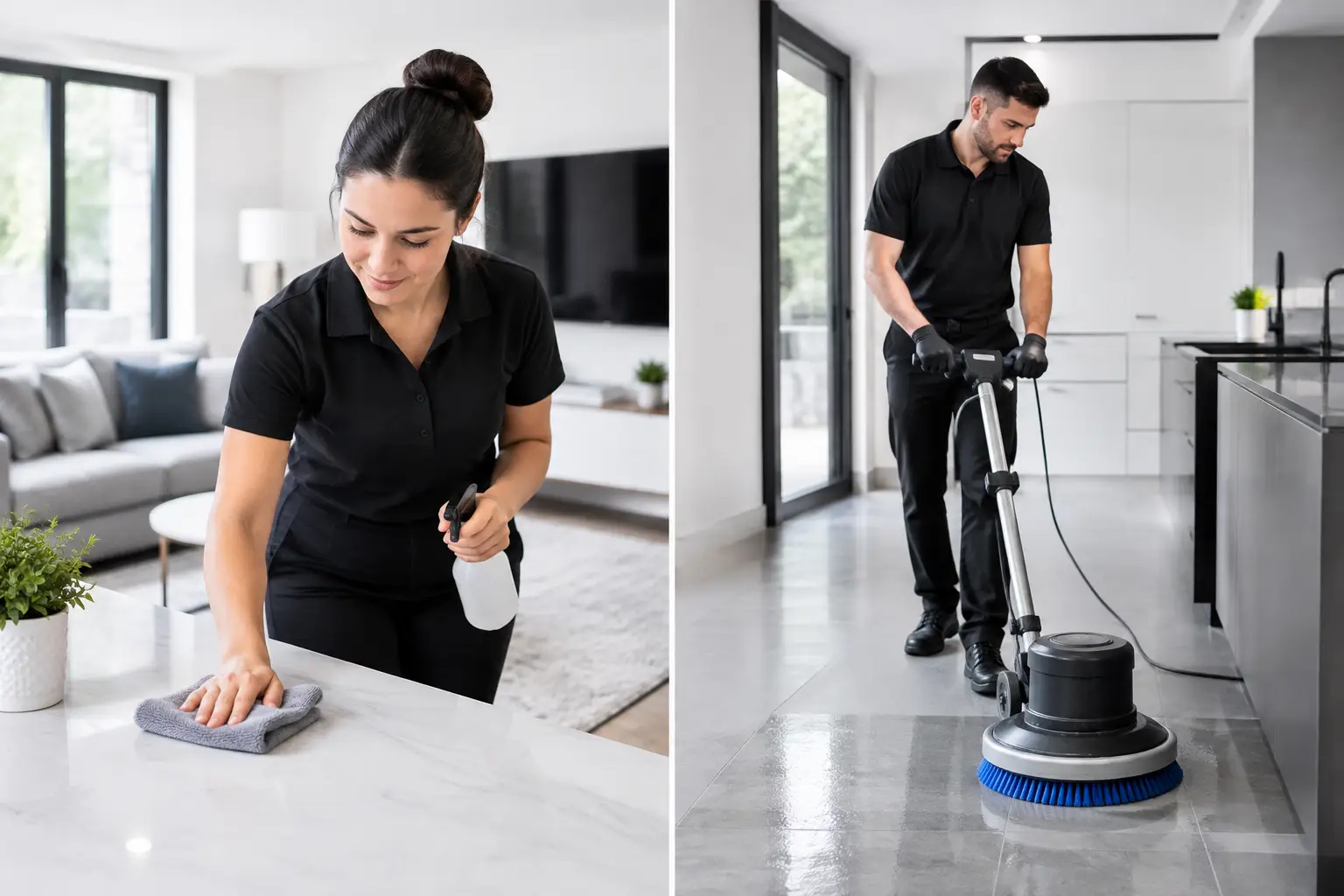
A home can look tidy and still need serious attention. The laundry may be folded, the counters clear and the floors passable, yet the shower grout is dull, the baseboards are collecting a quiet grey line and the inside of the fridge is becoming a mystery. That is where recurring cleaning versus deep cleaning becomes a useful distinction. They solve different problems, and choosing the right one makes maintaining a well-run home far easier.
For busy households, the goal is rarely to spend more time thinking about cleaning. It is to walk into a space that feels reset, presentable and ready to use. A deep clean establishes that standard. Recurring service protects it.
What is recurring cleaning?
Recurring cleaning is the maintenance plan. It focuses on the areas that get used, marked and cluttered between visits: kitchens, bathrooms, floors, dust-prone surfaces and the everyday details that change how a room feels when you enter it.
A typical recurring clean may include wiping accessible surfaces, cleaning sinks, toilets and showers, vacuuming and mopping floors, removing dust, taking out garbage and refreshing the kitchen. The exact scope should always be clear before service begins, particularly in larger homes or homes with pets, children or high-traffic entryways.
It is not designed to tackle every neglected corner on every visit. Asking for inside-cabinet cleaning, detailed blind washing, heavy oven degreasing and a full-scale wall wash during a standard weekly appointment is a bit like asking for a vehicle detailing while you are at the gas station. Those jobs can be done, but they require more time and a different plan.
The real value of recurring cleaning is consistency. With weekly, biweekly or more frequent appointments, dust and bathroom buildup do not get enough time to become a project. Floors stay presentable. Fixtures remain polished. You stop spending Friday evening deciding whether the house is clean enough for company.
How often should a home be cleaned?
Frequency depends on how the space is lived in, not just its square footage. A couple who travel often may find biweekly service works well. A household with young children, a shedding dog, active weekends and regular guests may prefer weekly cleaning. Some larger or busier homes benefit from two or more visits per week, especially when maintaining kitchens, bathrooms and floors is a constant cycle.
The same principle applies to workplaces. An office with a small team may need weekly service, while a customer-facing business, busy office or shared workspace can require cleaning two or more times each week, or daily. The right schedule prevents visible wear from becoming the normal standard.
What is deep cleaning?
Deep cleaning is a detailed reset. It addresses buildup and finishing work that sits beyond the usual maintenance routine. This is often the right starting point for a first professional visit, after a busy season, before hosting a major event or when a home has simply been running on autopilot for too long.
The work goes further into bathrooms, kitchens and overlooked surfaces. Depending on the agreed scope and the condition of the property, a deep clean can include detailed shower and tub cleaning, soap-scum removal, buildup around faucets, baseboards, doors and trim, light switches, interior glass, accessible vents, cabinet fronts, spot-cleaned walls and more thorough attention to appliances.
A proper deep clean takes time because buildup does not disappear at the same pace as surface dust. Grease around a stovetop, mineral deposits on fixtures and residue on shower doors may need careful product selection, dwell time and repeat passes. Rushing this work can leave surfaces looking streaky or, worse, risk damage to finishes.
Deep cleaning is also not the same as post-construction cleaning. Renovation dust can settle into vents, ledges, drawers and unexpected places long after the contractors leave. It often requires a dedicated approach, particularly when fine dust and construction residue are involved. Similarly, move-in and move-out cleaning usually follows a specific checklist built around an empty or nearly empty property.
Recurring cleaning versus deep cleaning: the practical difference
The simplest way to decide is to look at the condition of the space today and the result you want over time.
If your home generally feels clean but gets away from you between work, school runs, business travel and everything else, recurring cleaning is likely the answer. It keeps the routine work handled before it becomes mentally expensive.
If you are noticing dull bathroom fixtures, greasy cabinet fronts, dust along trim, fingerprints on doors or rooms that never quite feel finished after you clean, start with a deep clean. Once the home is reset, recurring visits are far more effective because the cleaner is maintaining a baseline rather than trying to recover it every appointment.
This is why many homeowners begin with a first-time deep clean and move directly into a weekly or biweekly schedule. It is a sensible handoff: one thorough reset, followed by consistent maintenance. There is no need to repeatedly let the home reach crisis level just to schedule another major clean.
Where people misjudge the scope
Most confusion comes from what is visible versus what is actually accumulating. A kitchen can look clean after the counters are wiped, but the cabinet handles, backsplash grout, appliance fronts and microwave interior may still show weeks of use. Bathrooms are similar. A quick wipe makes the vanity look better, while a deeper clean addresses soap residue, hard-water marks and the edges where grime settles.
High-touch areas also deserve attention, but cleaning and disinfecting are not interchangeable terms. Cleaning removes soil and residue from a surface. If a disinfectant is needed, follow the product instructions, including surface compatibility and required contact time. Mixing products to make them “stronger” is never a good idea. In particular, never combine bleach with ammonia, vinegar or other cleaners.
Material matters as well. Natural stone, wood finishes, delicate metals and specialty flooring can be damaged by the wrong product or technique. A good cleaning plan considers the actual surfaces in the home, not just a generic checklist.
When a deep clean is worth booking
A deep clean is particularly useful before recurring service begins, after an extended stretch of entertaining, following illness in the household once everyone has recovered, or when a property has been vacant. It can also be a practical choice before listing a home, welcoming a baby, moving in or handing over keys to a tenant.
For homeowners in Barrie, Innisfil, Newmarket, Aurora or Vaughan, seasonal shifts often make the need obvious. Winter brings salt, slush and extra entryway cleaning. Spring reveals dust on trim and window ledges. Summer means more open windows, patio traffic and guests. The schedule does not need to change with every season, but an occasional deeper reset can keep routine visits focused on maintenance rather than catch-up.
How to get better results from either service
Clear expectations make a meaningful difference. Before the first appointment, identify rooms that matter most, surfaces that need special care and areas that are off-limits. If there is a home office, a nursery, a pet routine or a particular product you prefer not to have used, say so upfront.
It also helps to reduce loose clutter before a visit. Professional cleaners can certainly work around a lived-in home, but clearing clothes, paperwork and toys from key surfaces gives them more time for actual cleaning. Think of it as making room for the work you are paying to have handled.
For ongoing appointments, leave feedback early and specifically. “Please give the glass shower door extra attention” is useful. “The kitchen looked great, but the mudroom needs more focus in winter” is even better. A professionally managed service should document those preferences so you are not repeating yourself every week.
Build a cleaning schedule that stays out of your way
The best cleaning plan is not the most elaborate one. It is the one that keeps your space reliably ready without creating another task to manage. Start with a deep clean if the home needs a true reset, then choose a recurring frequency based on real life rather than good intentions.
That approach gives the work a rhythm: detailed when needed, consistent where it counts. For clients who want cleaning handled rather than added to the weekly mental load, that rhythm is the point.


Stay Updated
We will send you info about Diamond Dynasty before it's released to the public