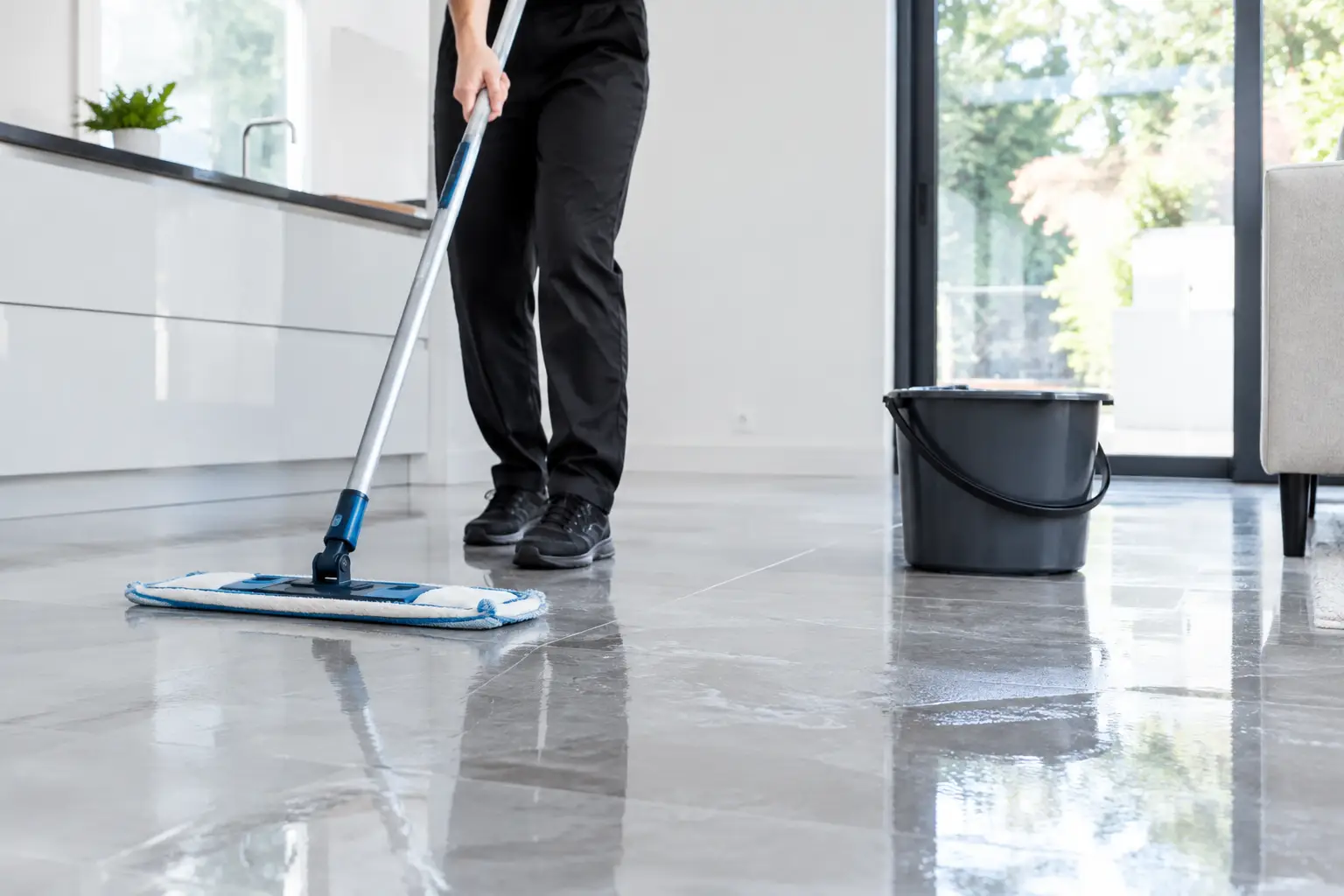
You finish mopping, the floor dries, and somehow it feels tackier than it did before. Socks catch slightly underfoot. Footprints show up almost immediately. If you are asking, why are my floors sticky after mopping?, the cause is often leftover cleaning product, a mop that is moving soil around, or a method that does not suit the flooring.
The fix is not always another round of mopping. On some floors, especially laminate and engineered wood, repeated wet passes can create a bigger problem. Start by working out where the stickiness is coming from and what your particular floor can safely handle.
Start here: what kind of sticky floor do you have?
Before reaching for the mop again, look at where the stickiness is and when it appeared. The pattern can point you toward the right fix.
- The whole floor feels sticky right after mopping: start by checking the amount of cleaner used, how dirty the mop water was and whether the product needed rinsing.
- Only the kitchen or dining area is sticky: a local spill, cooking grease or food residue may be the culprit.
- A cloudy or shiny film keeps coming back: there may be a layer of polish or incompatible products on the finish.
- The problem started after installation or refinishing: ask about adhesive or finishing products before attempting stronger cleaning.
- Edges are raised, swollen or buckling: stop adding moisture and have the flooring assessed.
Important: a plain-water rinse is not automatically safe. Check what flooring you have before putting any more liquid on it.
Why floors feel sticky even after they’ve been cleaned
In many homes, the leading suspect is cleaner residue. Detergent, concentrated floor cleaner, polish or an all-purpose product can leave a thin film when too much is used or when the dirt and solution are not removed properly. As the floor dries, the film can feel grabby and attract lint, dust and footprints.
That is why identifying the source matters. Product residue can often be improved with the right cleaning method, but adhesive, damaged coatings and moisture-related problems may need a different solution entirely.
Six common causes of sticky floors after mopping
1. Too much floor cleaner
More product does not mean a deeper clean. Concentrates are designed to work at the amount printed on the label. Pouring in an extra capful can leave a film behind once the water evaporates. Spray mops can do the same thing when one patch gets sprayed repeatedly.
2. Mop water that is already dirty
When the bucket is full of loosened dust, kitchen grease and tracked-in dirt, a mop may spread some of that soil back across the surface. Change the solution before it becomes grimy, wash or replace pads as you work, and do not use the same dirty pad for the entire house.
3. A cleaner that was not removed properly
Some cleaners are designed to stay on the floor without rinsing when used as directed; others need to be removed. Too much of either type can cause problems. Follow the product label and your floor’s care instructions rather than automatically rinsing with more water.
4. An old or overloaded mop pad
Reusable microfibre is effective when it is clean. Pads full of detergent, oils, fabric softener or old soil may leave streaks and residue. Wash them as instructed, generally without fabric softener, and replace a pad if it no longer cleans well.
5. Layers from previous products
Polishes, waxes, shine-enhancing cleaners and incompatible products can gradually build up. A single normal clean may not remove that coating. Worse, aggressive stripping products can damage the finish if they are not designed for the floor. Be cautious about escalating.
6. The wrong cleaning method for the floor
Glazed ceramic tile, luxury vinyl plank, laminate, hardwood and natural stone are not interchangeable. A damp cleaning method that is acceptable for one can be specifically prohibited for another. On moisture-sensitive flooring, liquid can seep into edges and seams. On stone, acidic cleaners can damage the material.
How to fix a sticky floor safely
Step 1: Check the flooring type before adding water
Find the care instructions for your floor if possible. This matters more than a generic social-media recipe. If you do not know whether the floor is laminate, vinyl, sealed hardwood, unsealed stone or something else, pause before wet mopping it again.
Step 2: Remove loose dirt first
Vacuum with the appropriate hard-floor attachment or use a dry microfibre mop. Removing grit and crumbs prevents them from being dragged around while you work on the residue.
Step 3: Try the gentlest approved method
For glazed ceramic or porcelain tile, a clean, lightly damp microfibre pad may remove light product film, provided the grout and tile care instructions allow it. Use fresh water as appropriate, change pads often and dry the area.
For vinyl or luxury vinyl plank, follow the manufacturer’s approved cleaner and moisture limits. Some products permit a lightly damp wipe; others specify a particular no-rinse solution. Avoid soaking seams or allowing water to pool.
For laminate, hardwood and engineered wood, do not assume a plain-water rinse is safe. Some major flooring manufacturers explicitly advise against wet mopping or washing with water. Use their recommended product and method, often a lightly applied cleaner with a suitable microfibre pad. Dry promptly.
For natural stone, use a stone-compatible, typically pH-neutral cleaner and the care method recommended for the stone and sealer. Skip vinegar and other improvised acidic solutions.
Step 4: Let the test section dry completely
Work in a small, less-visible area first. Once it has dried, check whether the tacky feel is gone. If it improved, repeat the same approved method on the next manageable section using clean pads. If nothing changes, stop rather than increasing the amount of cleaner.
Step 5: Recognise when cleaning is not the answer
If the floor still feels sticky after a careful, manufacturer-approved clean, there may be old polish, adhesive, a damaged finish or a coating that needs specialist assessment. General house cleaning cannot always remove or repair those layers, and a stronger chemical could make matters worse.
How to prevent the same sticky feeling next time
Keep the routine simple. Remove dry dirt first. Measure concentrated products instead of guessing. Use the correct cleaner for the flooring, and have enough clean pads to avoid carrying kitchen grease into the hallway or living room. Let the floor dry before everyone walks through the area again.
In homes with children, pets or busy entryways, targeted cleanup also helps. A quick wipe of a sugary spill or tracked-in slush is usually easier than leaving it for the next whole-floor clean. It saves time without adding another product layer everywhere.
Questions about sticky floors after mopping
Should I mop again with only water?
Not on every floor. Some tile and vinyl floors may tolerate a carefully controlled damp wipe, but some laminate and wood manufacturers prohibit wet mopping, even with plain water. Check the flooring instructions first.
Will vinegar remove sticky floor cleaner residue?
Do not treat vinegar as an all-purpose floor fix. It can damage natural stone and may be incompatible with wood-floor finishes and some other surfaces. An approved cleaner and the correct technique are safer than adding another homemade mixture.
Why does the floor feel sticky again a day later?
There may still be product film, an ongoing spill, dirty mop pads or a floor polish that attracts soil. If it keeps returning despite correct cleaning, investigate the finish rather than scrubbing harder.
When another round of mopping won’t help
If a careful, floor-appropriate clean doesn’t improve the problem, don’t keep adding products or scrubbing harder. A failing finish, old polish, adhesive or moisture damage may require assessment by a flooring specialist. The goal isn’t the wettest mop or strongest cleaner; it’s a floor that feels clean once dry without putting its finish at risk.


Stay Updated
We will send you info about Diamond Dynasty before it's released to the public